
















T
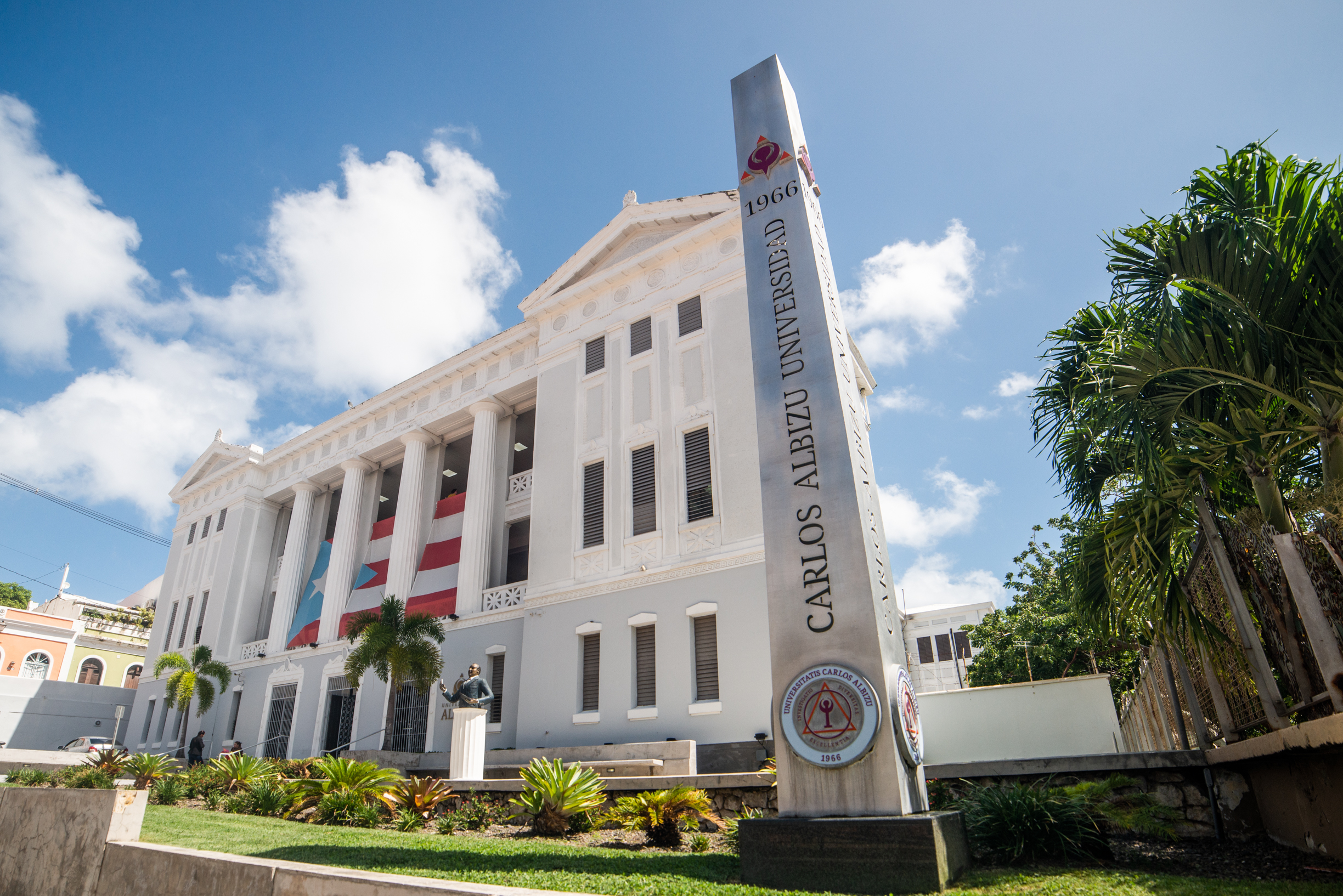
he story of Albizu University, which this year marks its 60th anniversary, is one of institutional persistence, conviction, and collective commitment. That is how Dr. Ruth C. Prevor remembers it. A clinical psychologist, graduate of the doctoral program in San Juan, and member of the Institution’s Board of Trustees for more than three decades, Prevor witnessed the University in years when its continuity could not be taken for granted.

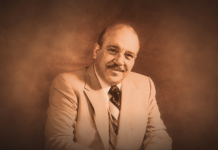
“If there was one thing Albizu was, he was ambitious,” recalls Dr. Prevor of the institution’s founder, Dr. Carlos Albizu. She experienced his work during the years when the University was only beginning to sustain itself, and witnessed the difficulties it had to overcome. “It was through Dr. Carlos Albizu’s persistence and conviction, and that of those who joined him on that journey, that this institution survived.”
Founded in 1966 as the Puerto Rico Institute of Psychology, which later became the Caribbean Center for Advanced Studies in 1971, Albizu University has evolved into a multi-campus institution. With locations in Puerto Rico and Florida, it currently offers a variety of undergraduate and graduate programs in psychology, behavioral sciences, speech pathology, and related fields. But it did not begin with the scale it has today. In the 1980s, when Dr. Prevor pursued her graduate studies, Albizu’s structure was still taking shape. Even so, it coexisted with a high academic and intellectual standard and with the strong commitment of its founder and faculty.
“If there was one thing Albizu was, he was ambitious”
Dr. Prevor’s choice to continue her graduate education at the institution was also a personal bet. “The way psychology was taught spoke directly to what I was looking for. The faculty were exceptional and deeply committed to their work and to Dr. Albizu’s mission.” Alongside the quality of instruction was a clear commitment to service and culturally relevant training. “Psychology is a service; it is a service to mental health. And if you’re going to provide care that is truly effective for a community, you have to understand that community’s needs”, Dr. Prevor explains. “You can’t apply frameworks that belong to a different population or a different culture.”

That emphasis also appears in the account of Dr. Maribel Del Rio-Roberts, a licensed psychologist, alumna of Albizu’s Miami campus, and current Chair of the Board. Looking back on her student years in the early 2000s, she remembers a graduate environment shaped by closeness, purpose, and a strong sense of professional formation and cultural sensibility. “Albizu did have a distinct intimacy to it. You really, truly knew your professors. They knew you by name. Not really just as a student, but also really treated you like a future colleague.” She also recalls “a shared sense of purpose, of serving underrepresented communities, multicultural communities,” and says that by the time she graduated in 2007, she felt that she had left “not only… with a degree, but also with a professional identity,” one “rooted in this sense of community and social responsibility.”
Alongside this mission-centered formation, the University incorporated clinical practice early on as an essential part of academic preparation. That model, now widely recognized as an institutional strength, has been central to the preparation of generations of mental health professionals. Over six decades, Albizu has trained graduates who now contribute to health, education, and human services systems across multiple contexts.
“Psychology is a service; it is a service to mental health”
For Dr. Del Rio-Roberts, that preparation became especially tangible during her own clinical training. Although she grew up speaking Spanish at home, all of her academic training had been in English. One of her first clients in the Goodman Center, Miami’s campus clinic, was a fully monolingual Spanish-speaking client, an experience she remembers as unsettling at first. “I remember really panicking,” she says. “I feel like I don’t know if my Spanish is good enough.” Over time, however, those experiences became foundational. She says that working with Spanish-speaking clients “really gave me the skills” that later opened opportunities in internship, postdoctoral training, and professional service, and ultimately allowed her “to really be a resource to the Spanish-speaking community.”
For Dr. Prevor, Albizu’s growth and reputation are not the result of any single individual’s efforts, but of contributions accumulated over time. “It has been a process of growth shaped by the contributions of many people, not just educators, but also administrators, donors, and individuals who have recognized the institution’s value to the community. It has truly been a collective effort”. The University’s current governance reflects that same collective effort, with professionals from different fields contributing knowledge and leadership to sustain and expand the institution’s mission.
That continuity between formation and stewardship is also present in Dr. Del Rio-Roberts’ trajectory. An alumna of the Miami campus and now in her eighth year on the Board, she did not imagine that her professional life would eventually include institutional leadership. “To even be considered to lead and to serve in a position of leadership really is very humbling, and I’m very grateful for that,” she says. Her perspective as Board Chair also gives her a clear view of Albizu’s development over time. Since her student years, she has seen “remarkable growth” in the range of programs, the physical campus, and the University’s research and training infrastructure. Even so, she says the institution has remained “true to the mission.”
“It has been a process of growth shaped by the contributions of many people”
In this context, Albizu’s 60th anniversary is not only commemorative. It also raises the question of how to deepen the University’s presence in the community and advance its mission amid changing conditions. Dr. Del Rio-Roberts speaks of a leadership vision centered on “innovation and expansion,” with attention to how Albizu can broaden its reach, operate more efficiently, and continue extending its impact in Latin America, the Caribbean, and the continental United States. At the same time, she points to an intensifying mental health crisis and the need to continue preparing “enough culturally responsive practitioners to meet those demands.”
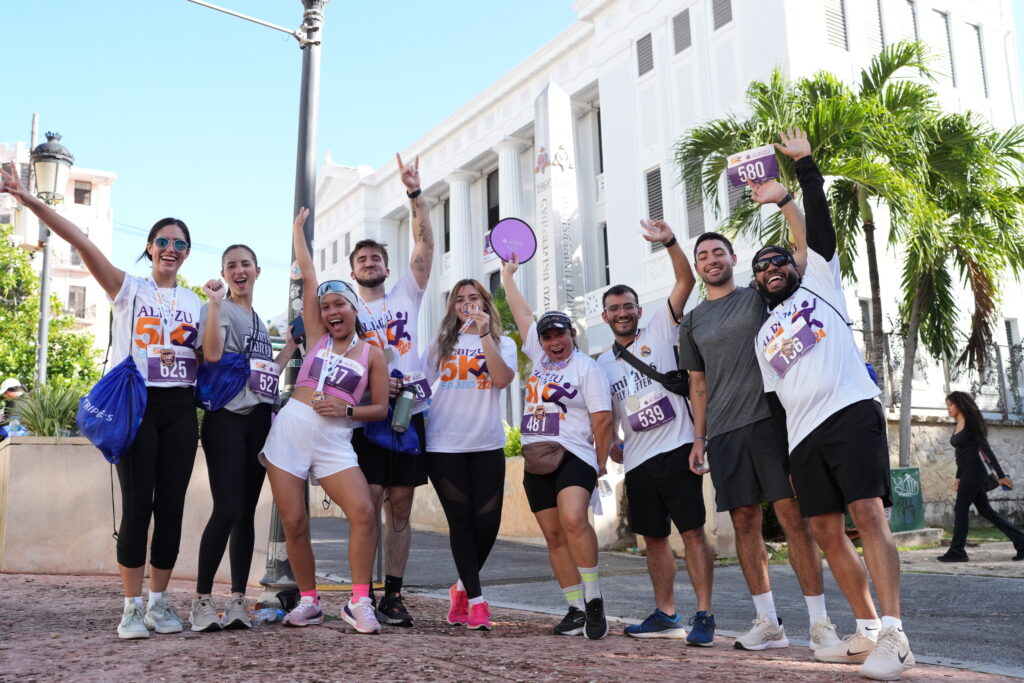
Albizu University will mark its 60th anniversary with a wide-ranging agenda designed to leverage key moments throughout the academic year and create spaces for connection that reflect the institution’s trajectory and its outlook toward the future. The celebration will extend from August 2026 to March 2027, with the goal of engaging students, alumni, faculty, allies, and collaborators. As part of that agenda, the University is developing an exhibition on its institutional history, along with a digital catalog documenting milestones, contributions, and defining moments from these six decades. Established events such as the Albizu 5K Run for Mental Health will also be incorporated as a platform to extend the commemoration’s reach.
With this celebration on the horizon, Dr. Prevor also recalls a lesson from Dr. Albizu that continues to guide her professional outlook decades later: “In one class I attended, he said: ‘What is our goal? No matter what you choose to do in life, even if you decide to sell piraguas, commit to being the best at it. So if you’re going to be psychologists, be good psychologists.’” In that philosophy, simple and direct, lies an essential part of the legacy Albizu University now celebrates: an institution that, from its beginnings, has insisted on excellence, service, and a sense of responsibility that endures across generations.
“commit to being the best at it”